Follow SANO SANO Laser Facebook page

2026 Top Picosecond Laser Tattoo Removal Machine Suppliers

Time:2026-09-20 Author:Aria
0%

Choosing among the 2026 Top Picosecond Laser Tattoo Removal Machine Suppliers requires more than comparing prices or glossy product images. Clinics need dependable systems, clear specifications, and support that remains useful after installation. A trustworthy supplier should explain pulse duration, wavelength options, spot sizes, cooling methods, and expected maintenance needs. These details affect how practitioners approach black ink, blue pigments, multicolored designs, and different skin tones.

Real clinic experience matters. A machine may look impressive during a demonstration, yet daily performance depends on calibration, handpiece comfort, treatment speed, and operator training. Ask whether the supplier provides documented testing, service records, warranty terms, and responsive technical support. Safety features also deserve close attention, including suitable protective eyewear, controlled energy settings, emergency procedures, and compliance with applicable regional requirements. Patient assessment should remain under qualified medical supervision.

No supplier is perfect. Some brochures use impressive language but provide limited evidence. Published specifications can also be difficult to compare fairly. That is why this guide examines supplier reputation, manufacturing quality, clinical education, after-sales assistance, and transparent communication. It also considers whether each company supports responsible treatment planning rather than promising instant results. Progress can be gradual. Results vary. Readers should verify certifications, local authorization, and independent feedback before purchasing. This practical review aims to help clinic owners make a careful, informed decision while recognizing that reliable technology still depends on skilled professionals and realistic patient expectations.
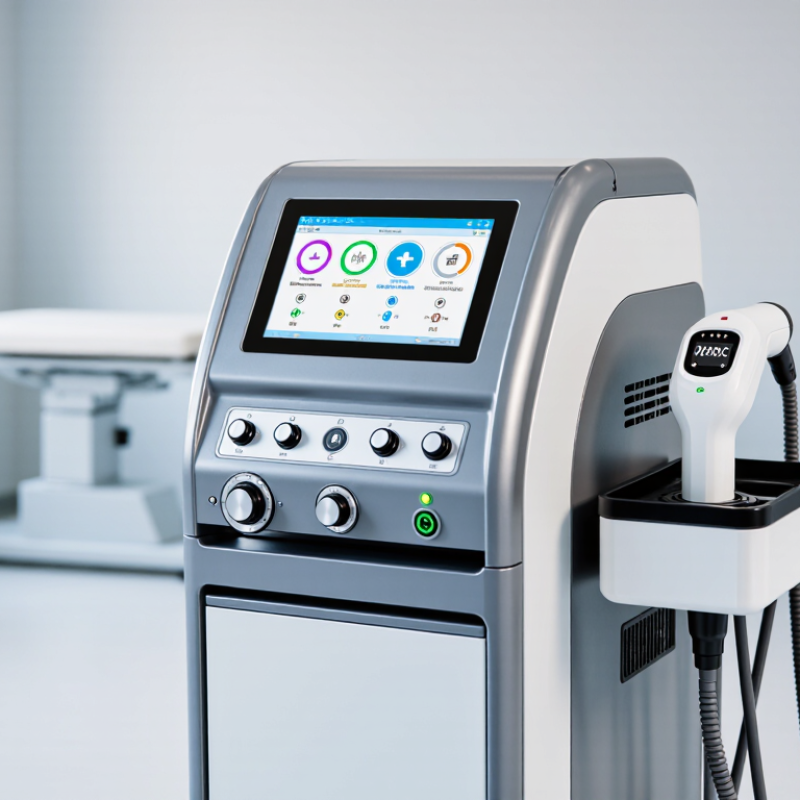
2026 Top Picosecond Laser Tattoo Removal Machine Suppliers

Picosecond Laser Basics: 300–900 ps Pulses and Photoacoustic Effects

Picosecond laser systems use pulses lasting about 300–900 picoseconds. These extremely short bursts create photoacoustic stress inside tattoo pigment. The ink absorbs light, expands rapidly, and breaks into smaller particles. Heat remains more limited than with many longer-pulse approaches.

That distinction matters. A 532 nm wavelength can target some red, orange, or yellow pigments, while 755 nm and 1064 nm wavelengths often address darker colors. Results still depend on pigment depth, skin tone, ink density, and immune clearance. The process is not instant.

Grand View Research estimates the global tattoo-removal market could grow at about 9.5% annually from 2024 to 2030. Allied Market Research projects a higher long-term growth rate, showing how forecasts vary by market definition. These figures describe commercial demand, not guaranteed clinical outcomes. Experienced suppliers should therefore provide pulse-width data, fluence ranges, spot sizes, cooling methods, and clinical references. Marketing language alone is weak evidence.

A practical evaluation includes test spots, documented skin reactions, and conservative treatment intervals. Darker skin requires careful wavelength selection and epidermal protection. Even then, some colors respond poorly. That is the uncomfortable part. Better engineering does not remove biological variability.

Key Technical Data: 532, 755, and 1064 nm Wavelength Options

In 2026, leading picosecond laser suppliers should offer 532, 755, and 1064 nm wavelength options. Each wavelength reaches different tattoo pigments and skin depths.

The 532 nm setting commonly addresses red, orange, and some yellow tones. The 755 nm wavelength often performs well on blue and green pigments.

The 1064 nm option is widely used for black and deeply placed ink. This range gives practitioners more control during treatment planning.

Technical specifications require careful comparison. Ask suppliers for pulse duration, fluence range, spot sizes, repetition rate, and cooling performance. A shorter pulse may create stronger photoacoustic effects, but higher energy is not automatically better. Real treatment decisions depend on pigment density, skin type, tattoo age, and previous sessions. Training matters, too. Look for suppliers that provide practical protocols, service records, safety guidance, and documented compliance with local medical-device rules.

Details matter.

I have seen specifications look impressive on paper, yet practical handling felt inconsistent. Some systems may offer broad settings but limited adjustment between patients. That weakness deserves honest discussion.

Reliable suppliers should explain expected responses, possible temporary skin changes, and when treatment should pause. They should not promise complete removal after a fixed number of sessions. A transparent demonstration, maintenance plan, and responsive technical team often reveal more than a polished brochure.

Supplier Compliance: FDA 510(k), CE Marking, and ISO 13485 Evidence

2026 Top Picosecond Laser Tattoo Removal Machine Suppliers

When evaluating picosecond laser suppliers, compliance evidence should guide the conversation. A supplier claiming FDA 510(k) clearance must provide the clearance number and confirm that it covers the exact device model. Do not accept a general FDA registration as equivalent evidence. Registration alone does not prove market clearance.

For European distribution, request the CE marking documentation, including the EU Declaration of Conformity and applicable conformity assessment records. The technical file should identify the device, intended use, risk classification, and relevant standards. Check whether the certificate remains valid and matches the current model, accessories, and software. ISO 13485 certification adds confidence in quality management, but it does not replace product-specific regulatory approval. Inspect the certificate scope, issuing body, expiry date, and manufacturing site. Small mismatches matter.

Tips: Ask for traceable documents. Verify certificate numbers independently. Review the latest revision. A polished folder is not enough. During supplier audits, look for complaint handling, calibration records, laser safety testing, and operator training materials. Request sample serial-number records and post-market surveillance procedures. Experienced buyers should also compare claims with the user manual and labeling. Some suppliers may provide incomplete evidence, and that is a useful warning, not an inconvenience. Compliance checks can feel slow, but skipping one document may create larger problems after installation.

2026 Top Picosecond Laser Tattoo Removal Machine Suppliers - Supplier Compliance: FDA 510(k), CE Marking, and ISO 13485 Evidence
Evidence Area Evidence or Record to Request Regulatory Meaning Verification Method Acceptance Indicator Evidence Priority
FDA 510(k) status FDA 510(k) number, decision date, device name, applicant information, and clearance decision letter. A 510(k) clearance indicates that FDA found the marketed device substantially equivalent to a legally marketed predicate device for the cleared indications. Search the FDA 510(k) Premarket Notification database and compare the official record with the model and intended-use statements. The model, applicant, indications for use, and product configuration are consistent across the FDA record and supplier documentation. Required for U.S. claims
FDA labeling alignment FDA-cleared indications for use, contraindications, warnings, operating instructions, and treatment parameters. Marketing and clinical claims should remain within the scope of the cleared indications and labeling. Compare brochures, website claims, user manuals, training materials, and sales quotations with the FDA-cleared indications. No unsupported claims such as guaranteed results, universal skin-type suitability, or treatment of conditions outside the cleared indication. Required for U.S. claims
CE marking EU Declaration of Conformity, CE mark details, applicable legislation, device classification rationale, and conformity-assessment records. CE marking declares conformity with applicable European Union product legislation. It is not an FDA approval or clearance. Check the Declaration of Conformity, technical documentation references, product label, and applicable European regulatory pathway. The declaration identifies the correct device, manufacturer, applicable legislation, standards, and authorized signatory. Required for EU market claims
Notified body evidence Notified body certificate and four-digit identification number when a third-party conformity assessment is required. Some medical devices require notified body involvement under the applicable European conformity-assessment route; the requirement depends on device classification and regulatory pathway. Confirm the notified body is designated for the relevant legislation and scope, and verify the certificate directly where possible. Certificate scope covers the specific device family, intended purpose, and quality-management activities claimed by the supplier. Conditional
EU MDR transition documentation Evidence showing whether the device is certified under Regulation (EU) 2017/745 or relies on a legally applicable transitional arrangement. EU medical-device compliance depends on the applicable regulatory status, classification, and transition provisions in force at the time of placing the device on the market. Review the certificate dates, Declaration of Conformity, applicable transition documentation, and economic-operator information. Dates, device scope, classification, and transition basis are internally consistent and current for the target market. Required for EU diligence
ISO 13485 certification Current ISO 13485 certificate, certificate number, scope, issuing certification body, issue date, expiry date, and manufacturing sites. ISO 13485:2016 specifies quality-management-system requirements for organizations involved in the life cycle of medical devices. It does not by itself authorize market access. Verify the certificate with the issuing certification body or an authoritative certification directory. The certificate is current, covers the relevant manufacturing site and device scope, and is issued by a competent certification body. Required supplier evidence
Design-control records Design history or technical-file index, design verification and validation summary, risk-management file, and change-control procedure. Documented design controls support traceability from intended use and hazards through verification, validation, and released specifications. Request redacted records, controlled-document indexes, and sample change-control documentation under a confidentiality agreement if needed. Records identify revision status, approval authority, risk controls, verification methods, and linkage to the released model. Supporting evidence
Laser safety compliance Laser classification, protective housing information, interlock description, emergency-stop function, warning labels, and user-access controls. Laser products should be evaluated against applicable laser-safety requirements and the intended operating environment. Review the risk assessment, safety test reports, product labeling, service manual, and physical safety features during inspection. Safety controls are documented, functional, labeled, and consistent with the declared laser class and operating instructions. Required technical evidence
Electrical and electromagnetic compatibility testing Applicable electrical-safety and EMC test reports, test laboratory details, test standards, model identification, and report dates. Testing supports safe operation and electromagnetic compatibility for the declared medical-device configuration. Confirm that reports identify the same model, accessories, power configuration, and software version supplied to customers. Reports are complete, traceable to the product configuration, and issued by a suitably competent laboratory. Required technical evidence
Clinical or performance evidence Clinical evaluation, performance testing, literature review, post-market data, and evidence supporting tattoo-removal claims. Evidence should support the device's intended purpose, performance, safety profile, and stated treatment limitations. Assess study design, population, endpoints, follow-up period, adverse-event reporting, and whether the tested configuration matches the supplied device. Claims are supported by relevant evidence and clearly state limitations, expected variability, and applicable patient or skin-type considerations. Required for claim review
Model and configuration traceability Exact model number, serial-number format, software version, handpiece specifications, wavelength options, accessories, and revision history. Regulatory evidence applies to a defined product configuration; similar-looking models may not share the same evidence. Match the quotation, nameplate, user manual, certificates, test reports, and shipment records. All documents identify the same model family or clearly define the permitted variants and accessories. Required before purchase
Post-market surveillance Complaint-handling procedure, adverse-event escalation process, corrective-action records, recall procedure, and periodic safety review. Effective post-market processes help identify, investigate, report, and correct safety or performance issues after commercialization. Review procedures, response-time targets, anonymized complaint summaries, and evidence of corrective and preventive actions. The supplier maintains documented reporting channels, investigation records, trend analysis, and customer notification controls. Supporting evidence
Supplier and manufacturing-site auditability Manufacturing-site address, quality agreement, supplier qualification records, process controls, calibration records, and audit history. Traceable manufacturing controls reduce the risk that the supplied product differs from the evaluated or certified configuration. Conduct a remote or on-site audit, review controlled procedures, and sample batch, calibration, and release records. Critical processes are controlled, equipment is calibrated, records are retained, and deviations are investigated and closed. Required for sourcing diligence
Training and service documentation Operator training curriculum, installation qualification, preventive-maintenance schedule, service manual, and replacement-part controls. Training and maintenance support safe operation and help preserve the validated performance of the device throughout its service life. Review training records, competency criteria, service response commitments, and maintenance instructions. Training covers indications, contraindications, laser safety, parameter selection, emergency procedures, and recordkeeping. Supporting evidence
Verification note: A supplier statement, logo, certificate image, or marketing claim should not be treated as independent proof. Confirm regulatory records, certificate validity, device scope, model identity, and intended-use alignment through the relevant issuing authority or certification body.

2026 Supplier Ranking Metrics: Fluence, Hz, Spot Size, and Warranty

2026 Top Picosecond Laser Tattoo Removal Machine Suppliers

A reliable supplier ranking should begin with verified performance, not attractive brochures. Fluence shows the energy delivered per square centimeter. Higher fluence is not automatically better. Skin type, ink density, wavelength, and treatment area must guide the setting. Ask suppliers for calibrated fluence data and pulse stability records. Real testing should include a printed output report, not only a product demonstration.

Frequency, measured in hertz, affects treatment speed and handpiece recovery. A higher Hz rate can shorten sessions, but heat management still matters. Spot size influences coverage, penetration, and operator control. Large spots may suit broad areas, while smaller spots help with detailed work. Warranty terms deserve equal attention. Check coverage for the laser source, power supply, handpiece, cooling system, and software. Confirm response times, spare-part availability, training, and repair procedures. Small details matter.

No ranking is perfect. Specifications can look impressive while daily usability remains uncertain. Request treatment logs, maintenance records, and references from comparable clinics. A dependable supplier explains limitations clearly and avoids guaranteed removal claims. It should also provide safety training, protective equipment guidance, and documented service support. In my view, the strongest 2026 suppliers balance stable fluence, practical Hz performance, flexible spot sizes, and a warranty that works after installation. Further independent testing is still worthwhile.

2026 Top Picosecond Laser Tattoo Removal Machine Suppliers

2026 supplier-ranking reference metrics: fluence, repetition rate, spot size, and warranty coverage

The chart presents non-brand-specific market reference values commonly seen in professional picosecond tattoo-removal systems. Fluence is shown in J/cm², repetition rate in Hz, spot size in mm, and warranty coverage in years. Actual specifications vary by wavelength, pulse duration, handpiece, spot size, and operating mode.

Clinical Safety Data: Fitzpatrick Types, Sessions, and Adverse Events

Clinical safety should guide any 2026 picosecond laser supplier assessment. Published dermatology reviews commonly report three to eight sessions for meaningful tattoo fading, with intervals of six to ten weeks. Session counts vary by ink density, color, location, and skin response. Darker skin needs caution.

Fitzpatrick types IV to VI may face higher risks of temporary hyperpigmentation, hypopigmentation, or textural change. A systematic review in Dermatologic Surgery reported that pigmentary changes were among the most frequent adverse events after laser tattoo treatment, while scarring remained uncommon when appropriate settings were used. The evidence is useful, but not perfect.

Supplier data should separate outcomes by Fitzpatrick type, tattoo color, body site, and treatment interval. Look for prospective follow-up, standardized photographs, and adverse-event reporting beyond four weeks. The FDA’s laser safety guidance also emphasizes trained operators, eye protection, cooling, and documented informed consent. Pain, redness, swelling, and crusting are expected short-term reactions. Blistering is not a success marker.

Some reports combine different laser wavelengths and patient groups, weakening direct comparisons. That limitation deserves attention. A credible supplier should disclose missing follow-up data, retreatment rates, and cases involving prolonged pigment alteration. A clean brochure cannot replace careful clinical records.

FAQS

What is a picosecond laser?

It delivers pulses lasting about 300–900 picoseconds. These brief bursts create photoacoustic stress inside tattoo pigment. The ink absorbs light and breaks into smaller particles. The process is not instant.

How does photoacoustic action affect tattoo pigment?

Pigment expands rapidly after absorbing laser energy. This mechanical effect helps fragment the ink. Heat may remain more limited than with longer pulses. Biology still varies.

Which wavelengths can target different pigment colors?

A 532 nm wavelength may address some red, orange, and yellow pigments. A 755 nm wavelength often targets darker colors. A 1064 nm wavelength may also address darker colors. Results depend on pigment depth and density.

What factors influence tattoo-removal results?

Skin tone, pigment color, ink density, and pigment depth all matter. Immune clearance also affects visible fading. Some colors respond poorly. Better engineering cannot remove biological variability.

Why are test spots useful?

Test spots show how the skin reacts before broader treatment. They can reveal unexpected redness or pigment response. Documented reactions support safer planning. Still, one test area cannot predict everything.

What should buyers request from a laser supplier?

Request pulse-width data, fluence ranges, spot sizes, and cooling methods. Ask for clinical references and the current user manual. Compare marketing claims with technical documents. Marketing language alone is weak evidence.

How can buyers verify compliance documents?

Request the exact FDA 510(k) clearance number when applicable. Confirm that it covers the precise device model. For European distribution, review the CE documentation and EU Declaration of Conformity. Check certificate scope, expiry date, accessories, and software.

Does ISO 13485 certification prove product approval?

No. ISO 13485 shows a quality-management system, not product-specific approval. Review the certificate scope, issuing body, expiry date, and manufacturing site. Small mismatches matter. A polished folder is not enough.

Conclusion

This guide to the 2026 Top Picosecond Laser Tattoo Removal Machine Suppliers explains how 300–900 picosecond pulses create photoacoustic effects that break tattoo pigments into smaller particles while helping limit thermal damage to surrounding skin. It reviews key wavelength options, including 532 nm, 755 nm, and 1064 nm, and describes how each may suit different pigment colors and treatment needs. The article also highlights the importance of supplier compliance, including verifiable FDA 510(k) status where applicable, CE Marking, and ISO 13485 quality-management evidence.

Suppliers are compared using practical performance and support criteria such as fluence, repetition rate, spot-size flexibility, cooling features, service capability, and warranty coverage. Clinical safety considerations include Fitzpatrick skin types, expected treatment sessions, treatment customization, and reported adverse events such as temporary redness, swelling, pigment changes, or blistering. Readers are encouraged to evaluate documentation, training, maintenance support, and professional clinical oversight before selecting equipment.


Aria

Aria

Aria is a dedicated marketing professional with a deep passion for innovative strategies and a keen understanding of our company's product offerings. With a wealth of experience in the industry, Aria excels at crafting engaging content that highlights the unique features and benefits of our......